
 English
 Español
 عربى
عربىContent
- 1 Why Sustainability Is Now a Coffee Packaging Baseline
- 2 Three Material Tiers: Recyclable, Compostable, and Biodegradable
- 3 What Compostable Coffee Packaging Certifications Actually Mean
- 4 Recyclable Coffee Packaging: The Infrastructure Challenge
- 5 Barrier Performance vs. Sustainability: Resolving the Trade-off
- 6 The Degassing Valve Problem—and Current Solutions
- 7 Greenwashing Red Flags: What to Watch Out For
- 8 A Practical Transition Roadmap for Coffee Roasters
Why Sustainability Is Now a Coffee Packaging Baseline
Five years ago, sustainable coffee packaging was a differentiator—something a specialty roaster could leverage as a premium brand signal. Today it is rapidly becoming a baseline expectation across retail, e-commerce, and foodservice channels. A 2024 Nielsen IQ study found that 73% of global consumers say they would definitely or probably change their consumption habits to reduce environmental impact, with packaging identified as the most visible and actionable element of a product's environmental footprint from the consumer's perspective.
Regulatory pressure is reinforcing the market signal. The EU's Packaging and Packaging Waste Regulation (PPWR), which entered into force in 2024 and sets mandatory recycled content and recyclability targets for flexible packaging, is already influencing purchasing decisions by European coffee brands and their international suppliers. California's SB 54, which requires significant reductions in single-use plastic packaging by 2032, is driving similar specification changes in the US market.
The business case is no longer confined to ethics: sustainable packaging commands a measurable price premium at retail, supports brand storytelling in the specialty segment, and increasingly appears as a supplier qualification criterion for retail buyers and distributors. Explore our sustainable flexible packaging solutions across compostable, recyclable, and post-consumer recycled material configurations for coffee applications.
Three Material Tiers: Recyclable, Compostable, and Biodegradable
The terms recyclable, compostable, and biodegradable are routinely conflated in marketing materials—including by packaging manufacturers themselves. Understanding the precise technical and regulatory definition of each term is the starting point for making an informed specification decision and for communicating accurately to consumers.
- Recyclable packaging is designed to be collected, sorted, and processed through existing waste management infrastructure into secondary raw material. For flexible film packaging specifically, recyclability depends heavily on the material composition (monomaterial films are more recyclable than multi-layer laminates), the local collection infrastructure (store-drop-off programs cover many flexible films not accepted in curbside bins), and the absence of contamination. A flexible coffee bag described as recyclable is typically a monomaterial polyethylene or polypropylene film that can be taken to a participating store drop-off location—not one that goes into the household recycling bin.
- Compostable packaging is designed to break down under specified composting conditions into carbon dioxide, water, inorganic compounds, and biomass at a rate consistent with other compostable materials. Industrial compostable packaging requires a commercial composting facility operating at elevated temperatures (typically 55–60°C) for defined periods. Home compostable packaging degrades under the less controlled conditions of a backyard compost heap, but at a slower rate and with more variability. Not all packaging labeled compostable is home compostable—the distinction matters enormously for end-of-life outcomes.
- Biodegradable packaging is the least regulated and most frequently misused term in the category. In the absence of a standardized definition with a defined timeframe and environmental conditions, "biodegradable" is effectively meaningless as a consumer claim. Any organic material will eventually biodegrade given enough time—the relevant question is under what conditions and over what timeframe. Regulatory bodies including the US FTC (Green Guides) and the EU (against greenwashing directive) have begun restricting unqualified biodegradability claims, and the term carries increasing legal and reputational risk without a third-party certification to support it.
What Compostable Coffee Packaging Certifications Actually Mean
Compostable packaging claims are only as credible as the certification backing them. Three major certification bodies define the technical standards that govern compostable coffee packaging globally:
ASTM D6400 (US standard): The American Society for Testing and Materials standard for compostable plastics. It requires that the material disintegrate at least 90% within 12 weeks in an industrial composting environment, and that no toxic residues remain at concentrations harmful to plant growth. Packaging certified to ASTM D6400 is accepted by the Biodegradable Products Institute (BPI), the primary certification authority for compostable products in the North American market. BPI certification means the packaging has been tested by an independent laboratory and confirmed to meet ASTM D6400 requirements—not merely that the manufacturer claims compliance.
EN 13432 (European standard): The European equivalent of ASTM D6400, with broadly similar requirements: 90% disintegration within 12 weeks, biodegradation of at least 90% of organic carbon within 6 months, and ecotoxicity testing of the resulting compost. TÜV Austria's OK compost INDUSTRIAL mark is the most widely recognized EN 13432 certification in Europe. EN 13432 is more restrictive than ASTM D6400 in some heavy metal content limits.
OK compost HOME (TÜV Austria): A more demanding certification requiring that the material degrade under the lower-temperature, less-controlled conditions of a home compost environment. Home compostable certification is significantly harder to achieve for high-barrier coffee packaging because the barrier layers required to protect coffee freshness are typically thicker laminates that degrade slowly without the elevated temperatures of industrial composting. Home compostable coffee packaging exists but represents a small segment of the overall compostable packaging market.
| Certification | Standard | Composting Condition | Disintegration Requirement | End-of-Life Route |
|---|---|---|---|---|
| BPI Certified Compostable | ASTM D6400 | Industrial (55–60°C) | ≥90% in 12 weeks | Commercial composting facility |
| OK compost INDUSTRIAL (TÜV) | EN 13432 | Industrial (55–60°C) | ≥90% in 12 weeks | Commercial composting facility |
| OK compost HOME (TÜV) | EN 13432 (modified) | Home (ambient temperature) | ≥90% in 26 weeks | Home compost or commercial facility |
| DIN CERTCO (Germany) | EN 13432 | Industrial | ≥90% in 12 weeks | Commercial composting facility |
A critical point for coffee brands: certification applies to the entire packaging assembly, including zipper, degassing valve, and any labeling. A bag made from certified compostable film that carries a conventional polypropylene zipper and an aluminum degassing valve is not a certified compostable package—only some of its components are. Always verify that the certification covers the complete finished bag, not just the base film.
Recyclable Coffee Packaging: The Infrastructure Challenge
Recyclable coffee packaging is often perceived as the simpler, more accessible sustainable option compared to compostable. The reality is more complicated. The multi-layer laminate films historically used in coffee packaging—combining PET, aluminum foil, and polyethylene in layers that provide the oxygen and moisture barrier coffee requires—cannot be recycled through any current commercial infrastructure. The layers cannot be separated efficiently, and the mixed-material stream contaminates recycling batches.
The industry response has been the development of monomaterial flexible films—packaging constructed entirely from a single polymer family, most commonly polyethylene (PE) or polypropylene (PP), with barrier properties achieved through coating or metallization rather than foil lamination. Monomaterial PE films can be taken to store drop-off recycling programs (How2Recycle Label in the US, Recycle Now in the UK) and processed through the same flexible film recycling stream as plastic bags and overwrap.
Two limitations define the current state of recyclable coffee packaging:
- Consumer behavior: Store drop-off recycling requires the consumer to actively transport packaging to a participating retail location rather than placing it in a curbside bin. Participation rates in voluntary store drop-off programs are substantially lower than curbside collection rates, meaning a significant proportion of technically recyclable packaging still ends up in landfill due to consumer friction in the disposal process.
- Barrier performance trade-off: Monomaterial PE films achieve oxygen transmission rates (OTR) and water vapor transmission rates (WVTR) that are adequate for most coffee applications but may fall short of the barrier requirements for specialty high-roast or flavored coffees with extended shelf-life targets. Where aluminum foil laminates achieve OTR values below 0.1 cm³/m²/day, high-barrier monomaterial PE films typically achieve 0.5–2.0 cm³/m²/day—still sufficient for 6–12 month shelf life in most applications, but a meaningful reduction in barrier performance for the most demanding specifications.
Barrier Performance vs. Sustainability: Resolving the Trade-off
Coffee is one of the most packaging-demanding food products. Freshly roasted coffee releases carbon dioxide for days after roasting and is simultaneously highly susceptible to oxygen absorption—the oxidation process that transforms fresh, aromatic coffee into the stale product consumers associate with poor quality. The packaging specification must address both challenges simultaneously.
The apparent conflict between barrier performance and sustainability resolves differently depending on the sustainable material chosen:
- Compostable high-barrier films: NatureFlex (cellulose-based) and metalized PLA films can achieve OTR values in the 1–5 cm³/m²/day range, which supports 4–9 month shelf life for standard roasts when combined with nitrogen flushing at fill. For specialty coffee with a 6-month shelf-life target, this barrier level is sufficient in most applications. These films achieve certified compostability without the foil lamination that blocks industrial composting in conventional packaging.
- Recyclable monomaterial films: EVOH-coated monomaterial PE and PP films push OTR performance into the 0.5–1.0 cm³/m²/day range, matching or approaching foil laminate performance while remaining recyclable in flexible film streams. The cost premium over standard monomaterial film is significant, but the shelf-life performance improvement justifies the additional cost for premium specialty applications.
- Post-consumer recycled (PCR) content films: Incorporating 30–50% PCR content into conventional flexible film packaging significantly reduces the virgin plastic consumed per bag without changing the recyclability or barrier properties of the finished structure. PCR films are currently the most achievable sustainability improvement for roasters not ready to change their barrier specification or end-of-life stream, and they qualify for many retail buyers' sustainability reporting requirements.
The Degassing Valve Problem—and Current Solutions
The one-way degassing valve is an essential functional component of coffee packaging. Freshly roasted coffee off-gases significant volumes of CO₂ for 24–72 hours after roasting. Without a degassing valve, this CO₂ inflates sealed bags to the point of seam failure or creates pressure sufficient to compromise the hermetic seal. The valve allows CO₂ to escape while preventing oxygen from entering—a one-way membrane that is critical to both shelf life and package integrity.
The sustainability problem: conventional degassing valves are made from polypropylene or polyethylene components with a silicone or rubber membrane. In a compostable bag, a conventional plastic valve creates a contamination point that may disqualify the package from industrial composting facilities. In a recyclable monomaterial bag, a multi-material valve creates the same mixed-material problem that undermines the recyclability of multi-layer laminates.
The current state of solutions:
- Compostable valves: Fully compostable degassing valves certified to EN 13432 are commercially available from several European manufacturers. They use PLA or similar biopolymer membranes and housings in place of conventional PP. The performance characteristics (opening and closing pressure, CO₂ flow rate) are broadly equivalent to conventional valves. These valves enable a fully certified compostable package assembly when combined with certified compostable film, zipper, and closure components.
- Recyclable valves: Monomaterial PE degassing valves are in commercial development and limited production. They allow the valve to enter the same flexible film recycling stream as the bag body, maintaining the monomaterial integrity required for store drop-off recyclability.
- Extended rest period before sealing: Some smaller specialty roasters address the valve issue by resting roasted coffee for 12–24 hours before sealing, allowing the initial surge of CO₂ off-gassing to dissipate. This approach can reduce (but not eliminate) the pressure buildup in a valve-free bag. It is viable for roasters with sufficient production scheduling flexibility but introduces inventory management complexity and shortens the post-packaging shelf life window.
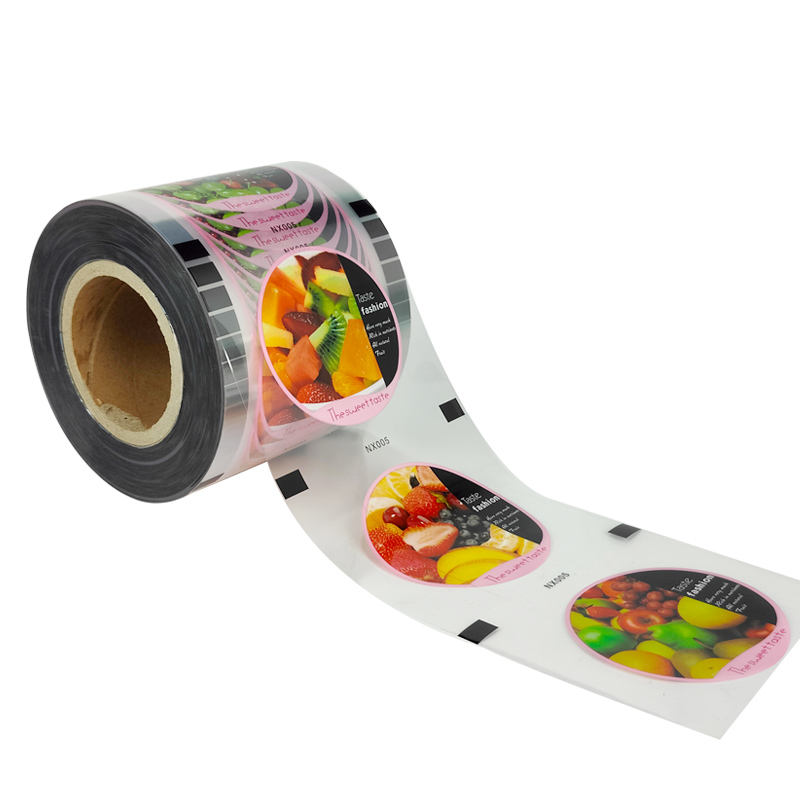
For high-volume coffee filling operations, our compostable and recyclable packaging roll film is compatible with pre-applied valve systems on form-fill-seal machines, enabling automated sustainable coffee packaging at production scale.
Greenwashing Red Flags: What to Watch Out For
The proliferation of sustainability claims in coffee packaging has generated a corresponding proliferation of misleading or unverifiable assertions. The following table identifies the most commonly encountered greenwashing red flags and explains what a credible claim looks like in each case:
| Claim Seen | The Problem | What a Credible Version Looks Like |
|---|---|---|
| "Biodegradable packaging" | No timeframe, no conditions specified. All organic material biodegrades eventually. | "Certified compostable to ASTM D6400" or "EN 13432 certified, industrial composting required" |
| "Eco-friendly bag" | No defined standard. Entirely subjective and unverifiable. | Specific material claim + third-party certification number + disposal instructions |
| "Recyclable" (on a multi-layer laminate) | Multi-layer foil laminates cannot be recycled through any current commercial program. | "Recyclable via store drop-off programs (How2Recycle Certified)" on a monomaterial film |
| "Made with sustainable materials" | No definition of sustainability, no percentage disclosed, no certification. | "Made with 30% post-consumer recycled PE content, certified by [body]" |
| "Compostable" (without composting conditions) | Industrial compostable packaging will not compost at home or in landfill. | "Certified compostable in industrial composting facilities (BPI Certified)" with disposal icon |
| "Plant-based packaging" | Plant-based origin does not equal compostable or biodegradable. Bio-based PE behaves identically to fossil-based PE in disposal. | "Bio-based PE film, recyclable via store drop-off (How2Recycle)" — separates origin from end-of-life |
A Practical Transition Roadmap for Coffee Roasters
Transitioning to sustainable coffee packaging does not need to happen in a single step. A phased approach allows roasters to build supplier relationships, test consumer response, and manage cost increases incrementally while making credible and documentable progress.
- Phase 1 — Audit and baseline (Month 1–2): Inventory current packaging by material type, annual volume, and cost per unit. Identify the highest-volume SKUs as priority targets for transition. Document the current shelf-life performance and barrier specification as a baseline against which sustainable alternatives will be evaluated.
- Phase 2 — PCR content transition (Month 3–6): Introduce post-consumer recycled content into the film specification of the highest-volume bags. A 30% PCR target is achievable with minimal cost increase and no change to barrier performance or production process. This provides an immediate, verifiable sustainability improvement that can be communicated to retail partners and customers without changing the recyclability tier of the packaging.
- Phase 3 — Recyclable or compostable pilot (Month 6–12): Select one SKU for a full sustainable format pilot—either monomaterial recyclable or certified compostable. Conduct fill tests, shelf-life validation, and fill-line compatibility testing before committing to a full product line transition. Collect consumer and retail buyer feedback on the new format.
- Phase 4 — Full line transition and certification (Month 12–24): Apply the validated sustainable format across the product line. Obtain formal third-party certification (BPI, TÜV, How2Recycle) to support marketing claims. Brief retail partners on the transition timeline and disposal instructions for consumer communications.
- Phase 5 — Supply chain transparency (Ongoing): Publish a packaging material specification sheet for trade buyers and sustainability-focused consumers detailing material composition, certifications held, and recommended disposal pathway. This level of transparency is increasingly expected by sophisticated buyers and positions the brand credibly in a category where greenwashing scrutiny is intensifying.




