
 English
 Español
 عربى
عربىA $152.75 Billion Market Driven Almost Entirely by Food
The global food flexible packaging market was valued at USD 100.26 billion in 2025 and is projected to reach USD 152.75 billion by 2035, growing at a compound annual growth rate of 4.3% over the forecast period. review the full food flexible packaging market forecast and segment analysis. Nearly 74% of all food products globally now rely on flexible packaging formats—a proportion that has risen steadily as food brands across every category have moved away from rigid containers toward lighter, more functional, and more cost-efficient alternatives.
The drivers behind this growth are structural rather than cyclical. Urbanization and smaller household sizes are sustaining demand for portion-controlled and single-serve formats. The growth of e-commerce food retail is accelerating adoption of packaging that ships without breakage. And sustainability pressures from both regulators and consumers are pushing brands toward flexible materials that use less material per unit of food protected than their rigid equivalents. For food manufacturers and brand owners evaluating their packaging specifications, understanding the landscape of flexible packaging solutions for the food industry has become a strategic decision rather than a routine procurement task.
Content
What Flexible Packaging for Food Actually Covers
Flexible packaging is defined by its physical property rather than its material: it is any packaging structure that changes shape under external pressure, as opposed to rigid packaging—glass jars, metal cans, hard plastic tubs—that maintains its shape regardless of applied force. In food applications, flexible packaging typically means multi-layer laminate films, pouches, bags, and roll stock produced from combinations of polymer films, aluminum foil, metallized films, and paper substrates.
The most common base materials in food-grade flexible packaging include:
- PET (Polyethylene Terephthalate) — Provides excellent clarity, stiffness, and heat resistance. Commonly used as the outer layer of laminate structures where printability and dimensional stability are required.
- PE (Polyethylene) — The most widely used sealant layer material in food packaging. LLDPE and LDPE grades provide the heat-sealability that forms the hermetic seals critical to food preservation. Also used in mono-material structures as the industry moves toward recyclable packaging.
- OPP (Oriented Polypropylene) — Used where clarity, stiffness, and moisture barrier performance are needed in a lightweight film. Common in snack food packaging and flow-wrap applications.
- Aluminum foil — The highest-performing barrier material in flexible packaging. Provides near-total resistance to oxygen, moisture, and light transmission. Used in applications demanding maximum shelf life—retort pouches, coffee packaging, pharmaceutical-adjacent food supplements.
- Metallized film — A cost-effective alternative to foil that deposits a thin aluminum layer onto a polymer substrate. Provides substantially better barrier performance than unmetallized film while retaining flexibility and reducing material weight versus foil laminates.
- Kraft paper — Used as an outer layer in sustainable and premium positioning formats. Provides a natural aesthetic, good printability, and partial moisture resistance. Increasingly combined with recyclable inner liners as brands pursue paper-based flexible packaging.
In practice, most food flexible packaging structures combine two to four of these materials in a laminate, with each layer contributing a specific function: structural integrity, printability, barrier performance, or sealability. For a broad orientation to the different structures and their applications, comprehensive guide to flexible packaging types, uses, and benefits provides a detailed breakdown of how these structures are assembled and specified.
The Major Formats and What Each One Does Best
The material structure of a flexible package determines its barrier properties. The physical format determines its functionality at point of use—how it is filled, displayed, opened, resealed, and stored. Six formats account for the vast majority of food flexible packaging volume worldwide.
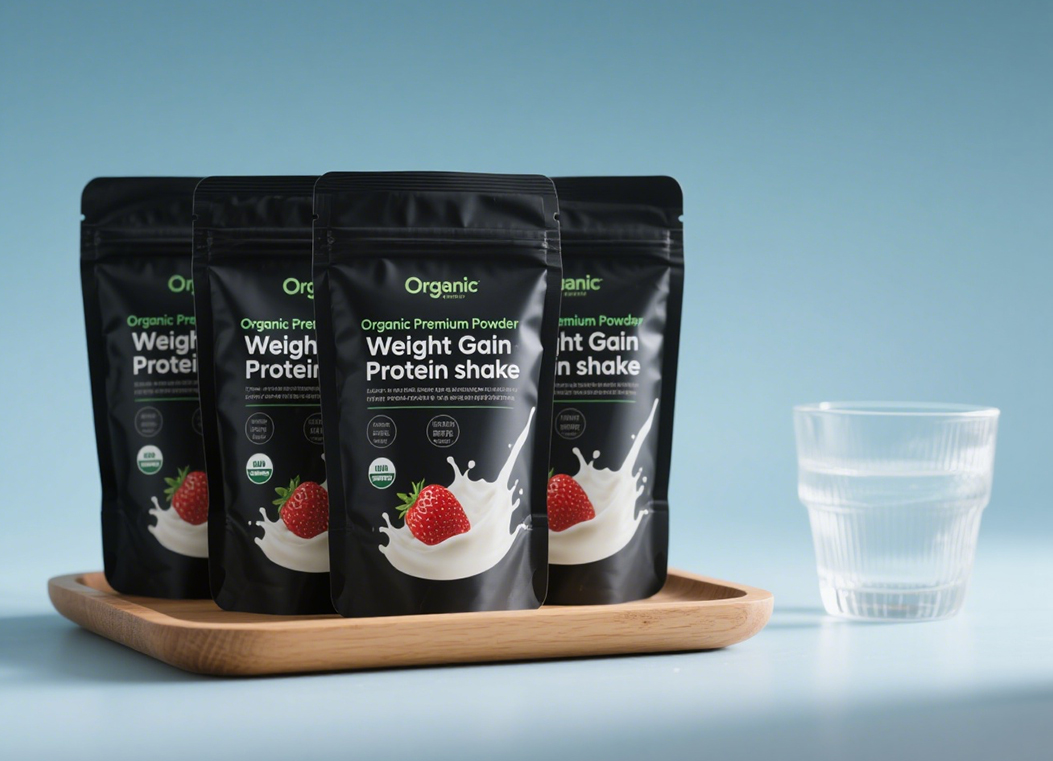
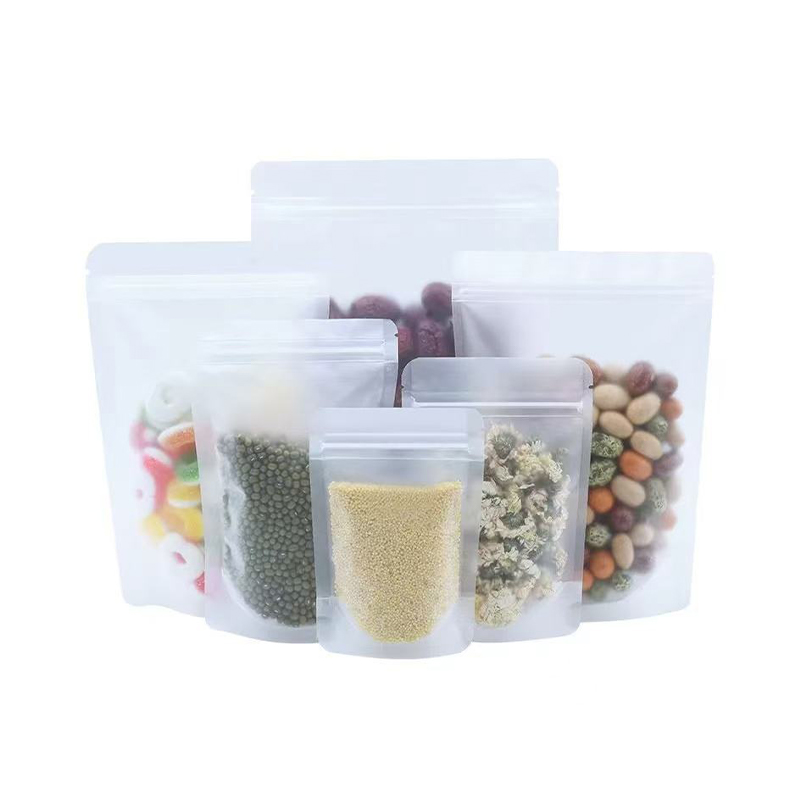
Stand-up pouches. The dominant format in premium food retail. A gusseted bottom panel allows the pouch to stand independently on shelf, providing a wide front panel for brand graphics and product visibility. Available with or without spouts, zippers, and windows. stand-up pouches for food packaging applications serve categories ranging from dried fruits and nuts to protein powders, pet food, and liquid sauces. The format's combination of shelf presence and functionality makes it the default specification for brands entering or upgrading retail channels.
Zipper bags. The resealable format of choice for products consumed across multiple uses. A press-to-close or slider zipper mechanism allows the package to be opened and reclosed repeatedly without loss of seal integrity, extending the usable life of the package after first opening. zipper bags for resealable food packaging are widely used in frozen foods, cheese, deli products, snack foods, and any application where the consumer is unlikely to consume the entire package contents in a single use. Resealable formats influence nearly 58% of consumer purchase decisions globally, making zipper functionality a meaningful commercial differentiator rather than a premium feature.
Eight-side seal bags. A premium structural format with a wide, flat bottom panel, four corner seals, and four side gussets that produce a block-bottom bag capable of standing independently with a square footprint. The format maximizes the printable surface area available for brand graphics and creates a distinctive shelf presence that differentiates premium food products from standard pillow-bag or three-side-seal presentations. eight-side seal bags for premium food presentation are increasingly specified for coffee, tea, specialty snacks, and artisan food brands where the packaging is intended to communicate quality. For snack-specific applications, snack food eight-side seal bag options include format variants optimized for the portion sizes, barrier requirements, and opening mechanisms typical of the category. Understanding the structural differences between the eight-side format and the stand-up format it is often compared with is covered in detail in the difference between flat-bottom and stand-up bag formats.
Three-side seal bags. The simplest and most cost-efficient pouch format—three sealed edges and one open edge through which the product is filled and then heat-sealed. The resulting flat package lies on shelf or hangs from a peg hook. Three-side seal bags are used extensively for single-serve food applications, condiment sachets, dried ingredients, and any product where resealability is not required and unit cost is a primary specification driver.
Vacuum sealed bags. Designed to remove air from the package interior before sealing, either as a stand-alone bag or as part of a thermoformed tray-and-lid system. Removing oxygen from the headspace dramatically slows the aerobic microbial activity and oxidative chemical reactions responsible for most food spoilage. vacuum-sealed bags for extended food shelf life are specified for processed meats, cheeses, cured products, fresh pasta, and any product where extended refrigerated or ambient shelf life is a commercial requirement.
Packaging roll film. The flexible packaging format for automated high-speed filling lines. Rather than pre-formed pouches filled and sealed individually, roll film is fed continuously through a form-fill-seal machine that forms the pouch, fills it, and seals it in a single automated process. packaging roll film for automated food filling lines is specified by manufacturers operating at volumes where per-unit packaging cost and line speed are the primary efficiency metrics, including processors of snacks, confectionery, frozen foods, and fresh produce.
Barrier Performance: The Science Behind Shelf Life
The shelf life extension that flexible packaging provides does not come from the physical structure of the pouch alone—it comes from the barrier properties of the laminate materials that prevent the environmental factors responsible for food degradation from reaching the product inside. Three mechanisms account for the vast majority of food spoilage that flexible packaging is designed to prevent.
Oxygen transmission. Aerobic bacteria and molds require oxygen to metabolize and reproduce. Oxidative rancidity in fats and oils is also an oxygen-dependent reaction. Flexible packaging films are rated by their Oxygen Transmission Rate (OTR), measured in cubic centimeters of oxygen passing through one square meter of film per day at standard temperature and humidity. An uncoated PET film may have an OTR of 80–100 cc/m²/day. A metallized PET film reduces this to 1–5 cc/m²/day. Aluminum foil laminates achieve OTR values below 0.01 cc/m²/day—effectively impermeable for practical food packaging purposes. food-grade clear vacuum three-side seal bags combine the oxygen barrier of the laminate structure with the active oxygen removal of the vacuum process, producing the lowest possible oxygen environment within the package.
Moisture vapor transmission. Water activity is the key variable governing microbial growth in most food systems. Products that need to stay dry—crackers, cereals, powdered ingredients, dried fruits—require packaging with low Moisture Vapor Transmission Rates (MVTR). Products that need to stay moist—fresh baked goods, deli meats—require packaging that retards moisture loss. OPP and PE films provide good moisture barriers; aluminum foil provides near-total moisture exclusion; paper-based structures without polymer inner liners provide very limited moisture protection and are unsuitable for high-moisture-sensitivity applications without adequate functional coating.
Light transmission. UV and visible light accelerates lipid oxidation, vitamin degradation, and color change in light-sensitive foods including oils, dairy products, coffee, and cured meats. Opaque packaging structures—using aluminum foil, metallized film, or pigmented polymer layers—block light transmission entirely. Where product visibility is commercially important, UV-blocking transparent films provide partial protection while maintaining clarity. The balance between barrier performance and consumer-facing transparency is a design specification decision that affects both shelf life and shelf appeal.
Sustainability: Where Flexible Food Packaging Is Heading
The sustainability challenge facing flexible food packaging is structural: the multi-layer laminate structures that provide the best barrier performance are also among the most difficult to recycle, because separating bonded layers of dissimilar materials at end-of-life is technically complex and economically marginal at current recycling infrastructure scale. The industry's response to this challenge is reshaping material specifications across all major categories.
Mono-material structures. The most direct path to recyclable flexible packaging is replacing multi-material laminates with single-polymer structures that can be processed through existing recycling streams. All-PE pouches—using different grades of polyethylene for the structural, barrier, and sealant layers—are commercially available and processable through LDPE film recycling collection points where these exist. All-PP structures are in advanced development. The barrier performance of mono-material structures has improved substantially with advances in coating technology, though foil-replacement applications for the highest-barrier requirements remain technically challenging.
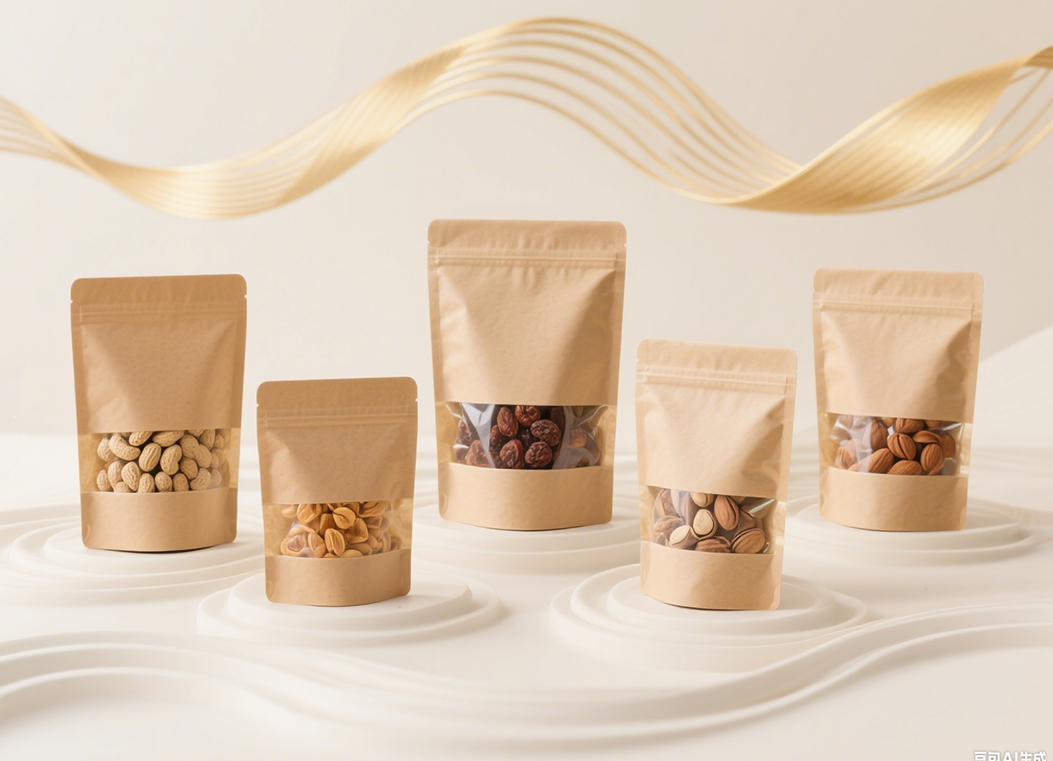
Paper-based flexible packaging. Kraft paper outer layers combined with functional barrier coatings or thin polymer inner liners are enabling food brands to shift toward paper-dominant packaging structures that communicate natural and sustainable positioning while maintaining adequate moisture and oxygen barrier performance for shelf-stable applications. kraft paper self-standing packaging bags represent the practical commercial expression of this trend—combining the aesthetic and environmental communication of kraft paper with the structural performance of a stand-up format. The resealable format variant further extends the consumer convenience dimension that makes flexible packaging competitive with rigid alternatives. stand-up zipper bags as a convenient packaging solution covers the functional case for this format in consumer-facing applications.
Lightweighting. Reducing the total material weight of flexible packaging structures—through thinner films, reduced laminate layer counts, and optimized pouch dimensions—is the most immediately scalable sustainability lever available to food brands. A 10% reduction in film gauge across a production run of millions of units produces a meaningful reduction in total plastic use without requiring changes to filling equipment, retail display systems, or consumer behavior. Material efficiency gains of approximately 62% are achievable through systematic lightweighting programs, according to market data on packaging adoption trends.
Choosing the Right Format for Your Food Product
The selection of a flexible packaging format is ultimately a specification exercise that balances four variables: the product's physical and chemical characteristics, the required shelf life under target storage conditions, the distribution and retail channel requirements, and the brand positioning the packaging needs to communicate.
For dry shelf-stable foods—snacks, nuts, dried fruits, coffee, tea, powdered ingredients—the primary specification criteria are oxygen and moisture barrier, resealability for multi-serve products, and shelf display format. Stand-up pouches with zipper closures in high-barrier laminate structures cover the majority of premium dry food applications. Eight-side seal formats provide superior shelf presence for brands competing in premium retail channels where visual differentiation drives trial.
For fresh and refrigerated foods—processed meats, cheese, fresh pasta, ready meals—the dominant requirement is oxygen exclusion, typically achieved through vacuum packaging or modified atmosphere packaging (MAP) in high-barrier three-side seal or thermoformed structures. Vacuum three-side seal bags are the workhorse of fresh protein packaging; their clear construction allows the product to serve as its own visual communication at point of sale.
For liquid and semi-liquid foods—sauces, soups, beverages, condiments—stand-up spout pouches provide fill-and-seal functionality with consumer-friendly dispensing and reclosure. The spout mechanism must be specified to match the viscosity of the product and the filling equipment available. Roll film structures fed through liquid form-fill-seal equipment are the high-volume production format for single-serve beverage and sauce sachets.
For pet food—both dry and wet formats—the packaging specification mirrors the human food categories it parallels: high-barrier eight-side seal or stand-up zipper formats for dry kibble, retort-capable laminate pouches for wet formats. The pet food category has been among the fastest adopters of premium flexible packaging formats as brands compete on shelf differentiation in a rapidly growing market segment.
Across all categories, printed stand-up pouches for branded food products offer the combination of high-quality rotogravure or flexographic printing, structural performance, and retail display functionality that makes them the default starting specification for food brands entering flexible packaging for the first time. From that baseline, the specific barrier requirements, format variants, and functional features of the final specification are determined by the product, the channel, and the shelf life target—decisions that reward careful material and format selection from the outset.




