
 English
 Español
 عربى
عربىContent
What Makes a Bag a "Block Bottom" Bag
Set a bag of coffee down on a shelf and it either stands there on its own or it doesn't. That single detail — whether the base holds a shape without support — is what separates a block bottom bag from most of the flexible packaging around it.
The structure comes from gussets folded in at the sides and sealed at the bottom, creating a rectangular base with creased vertical corners. Once filled, that base squares off into something closer to a small box than a bag, which is why the format is also called a flat bottom bag or a side-gusseted bag in different corners of the industry. A back panel fin seal runs down the center, leaving the front, back, and both side panels free for branding. a dedicated line of eight-side seal block bottom bags follows this exact construction — eight precision seals forming a base that holds its shape from the moment it's filled to the moment it's emptied.
Block Bottom vs. Flat Bottom Pouch: Don't Confuse the Two
Here's where packaging terminology gets genuinely confusing, and it's worth untangling before placing an order. Some suppliers use "flat bottom bag" as a direct synonym for a block bottom bag — the gusseted, self-standing style described above. Others use the same phrase for something structurally different: a simple two-panel pouch, sealed flat on the sides and bottom, that lies down rather than stands up. That second style is sometimes called a pillow pouch, and it cannot hold an upright shape no matter how it's filled.
The practical test is the gusset. If a bag has folded, creased side panels that expand into a rectangular footprint, it's a true block bottom bag built to stand on a shelf. If it's just two flat sheets sealed on three sides, it's a pillow-style pouch meant for binning, freezing, or flat stacking rather than shelf display. When a spec sheet or supplier uses "flat bottom" language, ask which construction they mean before committing to a print run.
Material Choices and What They Protect Against
The gusseted structure gives a block bottom bag its shape, but the film or paper laminate determines whether the product inside actually stays fresh. Each material option trades off differently between barrier performance, cost, and shelf appearance.
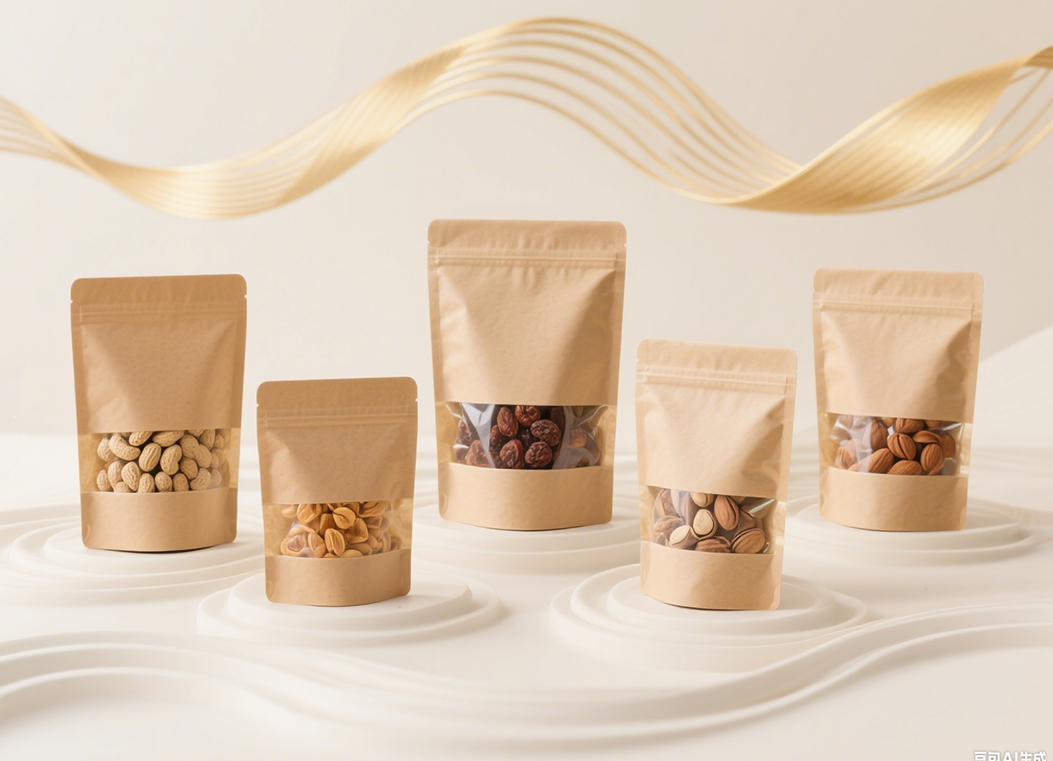
Kraft paper delivers a natural, premium look that reads well for coffee and specialty foods, though a pure paper build offers limited moisture and oxygen protection unless laminated with a plastic inner layer; a kraft paper block bottom bag built for stand-up food storage pairs that aesthetic with a sealed inner lining for practical shelf life. Aluminum-coated and metalized films sit at the other end of the spectrum, blocking oxygen, moisture, and UV light almost completely — the standard choice for products where flavor and aroma degrade quickly, which is why an aluminum-coated block bottom bag for high-barrier protection shows up so often in coffee and roasted nut packaging. Clear or non-metalized films sacrifice some barrier performance in exchange for product visibility through a window.
For any bag that will hold food, the material choice isn't just about shelf life — it's a regulatory question. Under U.S. law, FDA guidance on substances that come into contact with food requires that any component of the packaging expected to migrate into the product — including adhesives, colorants, and laminate layers — be authorized through a food contact notification or an existing food additive regulation before it reaches the market.
Closure Options: Matching the Seal to the Product
A block bottom bag's base handles stability; the top closure handles freshness and repeat access, and the right choice depends heavily on how the product gets used after the bag leaves the shelf.
A permanent heat seal is the simplest and cheapest option, appropriate for products consumed in one sitting where resealing isn't a concern. Products used across multiple sessions — ground coffee, pet treats, snack mixes — do better with a resealable zipper, which trades a small per-unit cost increase for a closure the customer can open and shut repeatedly without damaging the bag. Freshly roasted coffee adds one more variable: a one-way degassing valve lets built-up carbon dioxide escape without letting oxygen back in, which prevents the bag from swelling or bursting during the days right after roasting. Tin-tie closures split the difference, offering a reusable, decorative seal without the manufacturing complexity of a zipper track. For a closer look at how these mechanisms actually work and where each one fits, this breakdown of sealing methods and how to choose between them covers the tradeoffs in more depth.
Which Products Actually Belong in a Block Bottom Bag
The upright, box-like base isn't just cosmetic — it solves a specific set of problems for specific product types, and it's worth checking whether a product actually benefits before defaulting to this format.
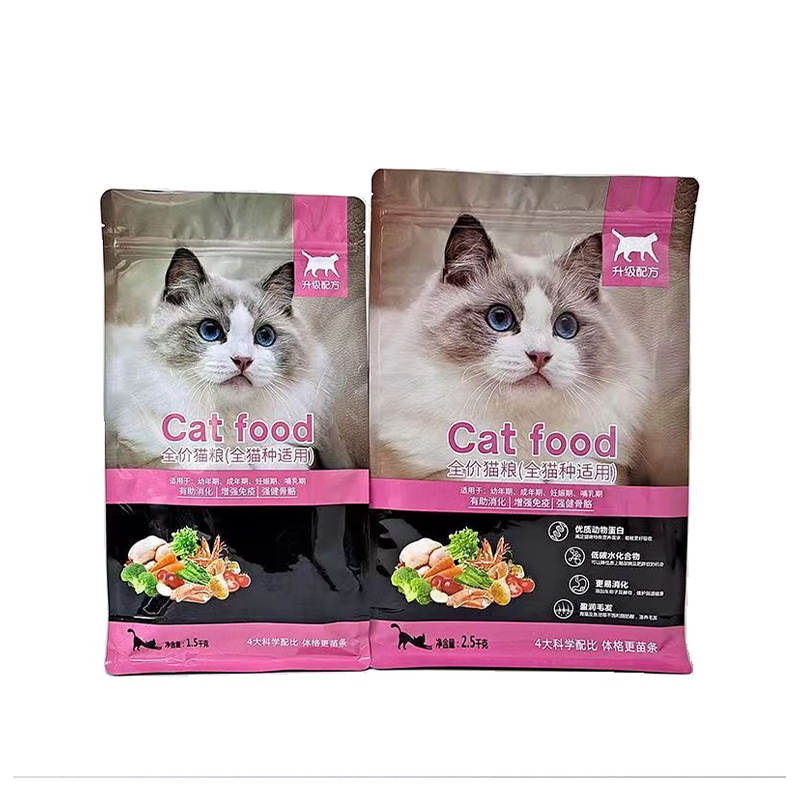
Coffee and tea are the format's home turf: consistent volume, a need for a degassing valve, and a shelf presence that rewards standing upright next to competitors. Powders and granular dry goods benefit from the flat base for the same reason a box beats a bag on a pantry shelf — nothing rolls, tips, or slumps sideways. Pet food and treats lean on the format's higher weight capacity and durability for repeated handling; a pet food block bottom bag is typically built with a heavier gauge film to survive that handling. Snacks and specialty foods use the same structure primarily for shelf branding — the flat front and side panels give a a snacks block bottom bag far more print real estate than a pillow pouch of the same volume.
What to Check Before You Place an Order
| Check | Why it matters |
|---|---|
| Gusset construction confirmed, not just "flat bottom" wording | Avoids ordering a pillow pouch by mistake |
| Barrier material matched to shelf life needs | Kraft, foil, and clear films protect against different threats at different costs |
| Closure type matched to consumption pattern | Single-use vs. resealable changes both cost and customer experience |
| Food contact compliance documentation available | Required for any bag holding food products sold in the U.S. |
A supplier who can walk through each of these points clearly — rather than defaulting to whatever's already in stock — is usually the one worth ordering a sample from before committing to a full production run.




