
 English
 Español
 عربى
عربىContent
What Makes Kraft Paper an Environmentally Preferable Material
Kraft paper starts as wood pulp, chemically broken down through the kraft process until the lignin and cellulose fibers separate. That fiber is what gets strained, pressed, and rolled into the recognizable brown paper used in food pouches. It's the same basic material family as shipping paper and grocery bags, just refined enough to handle food contact and printing.
What makes it attractive from an environmental standpoint isn't exotic — it's that wood pulp is a renewable input, and the finished paper breaks down under normal composting conditions without leaving persistent plastic fragments behind. A single-layer kraft pouch is also one of the easier packaging formats to sort correctly, since there's no need to separate a foil layer or peel apart laminated films before it can go into paper recycling or a compost stream. For a broader look at how paper-based formats stack up against rigid alternatives like glass and metal, our comparison of rigid packaging materials and their flexible alternatives covers where each format tends to win.
None of this makes kraft paper automatically "better" in every category — a plastic pouch typically weighs less and uses less material per unit of product protected, which cuts down on shipping emissions. Kraft paper's advantage is specifically at end-of-life: it degrades in ordinary composting conditions and doesn't require a specialized industrial facility the way many bioplastic films do.
The FSC Question: Where the Paper Actually Comes From
"Kraft paper" tells you about the manufacturing process, not where the trees came from. That distinction matters, because paper sourced from poorly managed or illegally logged forests can carry the same brown, recognizable look as paper from a responsibly managed one — there's no visual way to tell the difference.
This is what Forest Stewardship Council certification actually verifies. According to the Forest Stewardship Council's own guidance on paper and packaging, FSC certification tracks material through a documented chain of custody back to forests managed under specific environmental and social standards, which is the only way a buyer can confirm the paper isn't contributing to deforestation. A pouch labeled "kraft paper" without an FSC mark isn't necessarily a problem, but it also isn't making any verifiable claim about sourcing — the certification is what turns "looks eco-friendly" into something a brand can actually stand behind.
The Trade-Off Nobody Talks About: Barrier vs. Biodegradability
Here's the part most marketing copy skips over: plain kraft paper is a poor barrier against oxygen, moisture, and light on its own. Coffee, in particular, is aggressive about punishing weak barriers — roasted beans go stale within weeks when exposed to enough oxygen, and that staling process is exactly what a good coffee pouch is designed to slow down.
That's why most kraft paper coffee pouches on the market aren't pure paper at all — they're kraft paper laminated to a thin foil or film layer for barrier protection, which improves shelf life but reduces how easily the pouch can be recycled or composted as a single stream. A fully compostable single-layer kraft pouch protects the environment at disposal but sacrifices shelf life; a laminated kraft-foil structure protects the product but complicates end-of-life. Our overview of how flexible packaging formats balance barrier performance for food goes deeper into how different film and lining combinations affect this trade-off. There's no version of kraft paper that avoids this tension entirely — the honest framing is that a brand has to decide which side of the trade-off matters more for a given product.
Which Products Actually Suit a Kraft Paper Pouch
Shelf life requirements vary enormously by product, and that's really what should drive the material decision rather than sustainability messaging alone. Dry, low-oxidation products — tea leaves, dried herbs, grains, and many snack foods — tolerate a lighter barrier and can often work well in a lightly-lined or even single-layer kraft structure without a noticeable freshness penalty.
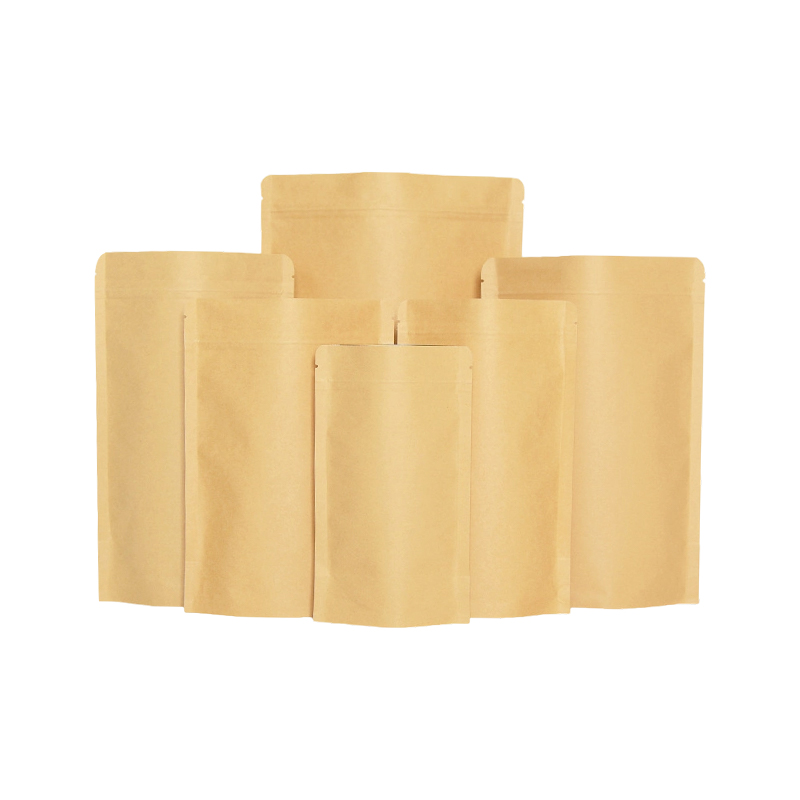
Products with high fat content or strong aromatics are less forgiving. Nuts and roasted coffee both oxidize quickly once exposed to air, which is why coffee packaging almost always needs a meaningfully stronger barrier than a bag of loose-leaf tea does. Kraft paper self-standing packaging bags work well for this lighter-barrier category, while products that need a longer shelf life or more aggressive oxygen protection are better served by sealed stand-up kraft paper bags for food storage built with an internal lining that still keeps the kraft paper look and feel on the outside.
Kraft Paper vs. Foil-Lined Alternatives: When Each Makes Sense
For a specialty coffee roaster shipping beans that need to stay fresh for six to twelve months on a retail shelf, a high-barrier aluminum foil coffee pouch with a degassing valve is often still the more practical choice, since it reliably blocks oxygen, light, and moisture while letting roasted beans release CO₂ safely. The trade-off is a packaging format that's harder to recycle through ordinary paper streams.
A kraft paper pouch makes more sense when the brand's priority is minimizing end-of-life impact and the product itself doesn't demand months of shelf stability — think small-batch snacks, bakery goods with a shorter sell-through window, or dry goods that consumers will use up quickly after purchase. Neither format is universally correct; the right call depends on how long the product actually needs to stay fresh weighed against how much the disposal impact matters to the brand and its customers.




