
 English
 Español
 عربى
عربىContent
- 1 Coffee Bag Sizes: The Complete Guide for Roasters and Retailers
- 2 Bag Style and How It Affects Coffee Bag Dimensions
- 3 Why Most Potato Chip Bags Cannot Be Recycled
- 4 Current Recycling Options for Chip Bags
- 5 The Future: Recyclable and Sustainable Snack Packaging
- 6 Custom Coffee Bag and Snack Packaging Solutions from BC Plastic Packaging
Coffee Bag Sizes: The Complete Guide for Roasters and Retailers
Choosing the right coffee bag size is one of the most consequential decisions a roaster or retailer makes — not just for freshness, but for cost, customer experience, and brand positioning. Too large a bag introduces excess headspace that accelerates oxidation; too small a bag forces frequent repurchases that frustrate bulk buyers. The goal is to match bag capacity to your customer's realistic consumption window, which for most retail coffee is between one and three weeks.
The table below summarizes the standard coffee bag sizes used across North American and European markets, together with their typical applications and approximate cup yields:
| Size | Weight (Metric) | Approx. Cups | Best For |
|---|---|---|---|
| 2 oz – 4 oz | 57 g – 113 g | 5 – 12 | Samples, gift packs, limited-edition roasts |
| 8 oz | 227 g | 15 – 20 | Trial bags, specialty blends, single-origin retail |
| 12 oz | 340 g | 24 – 36 | Standard retail — most popular size in North America |
| 1 lb (16 oz) | 454 g | 40 – 45 | Regular household drinkers, small-to-medium roasters |
| 2 lb | 907 g | 80 – 90 | Frequent drinkers, shared spaces, subscription boxes |
| 5 lb | 2.27 kg | ~200 | Cafés, wholesale, bulk buyers |
In North America, the 12 oz bag dominates retail shelves because it balances freshness with value — enough for approximately two weeks of daily brewing without the risk of staleness that comes with larger formats. The 1 lb bag is the preferred choice for small-to-medium specialty roasters who sell direct-to-consumer, offering a slight cost advantage per gram while remaining manageable for home storage. At the commercial end, 2 lb and 5 lb bags reduce packaging frequency and per-unit material cost, making them standard for wholesale and café supply channels.
European markets tend to favor metric sizing — 250 g and 500 g formats are more common than their imperial equivalents — while specialty markets in Japan and East Asia often prefer smaller 100 g and 200 g formats suited to single-variety tasting. If you export or sell across markets, offering two or three size options rather than a single format covers the broadest range of customer needs without fragmenting your inventory unnecessarily.
One variable that shifts bag size selection is whether the product is whole bean or ground. Whole bean coffee is less dense than ground coffee, meaning the same net weight requires more volume inside the bag. A 12 oz bag of whole beans will feel noticeably less full than a 12 oz bag of ground coffee — this is expected, but it is worth accounting for when selecting bag dimensions and headspace.
Bag Style and How It Affects Coffee Bag Dimensions
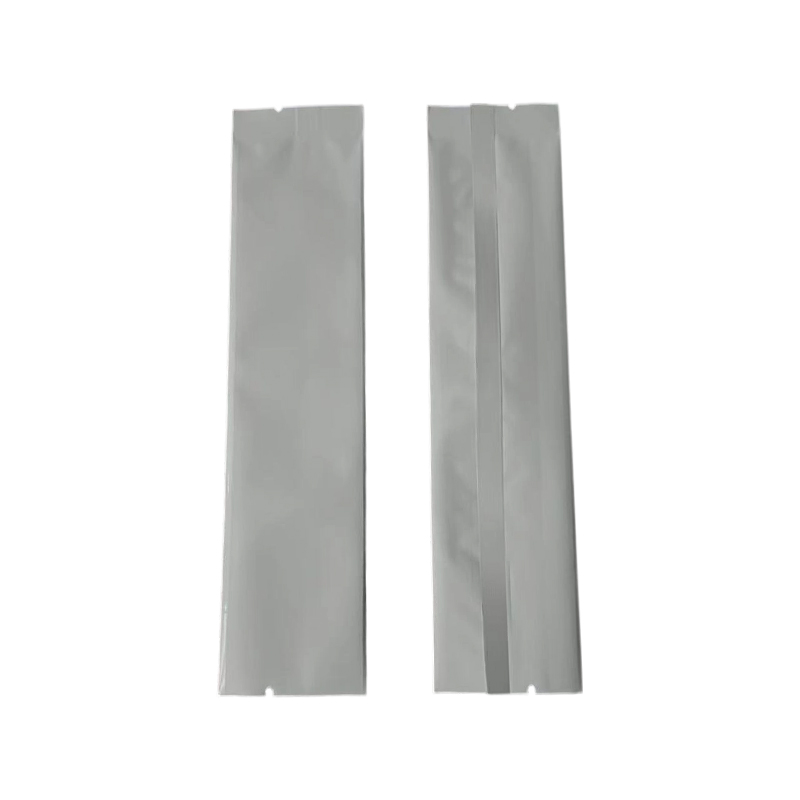
Net weight alone does not determine the physical size of a coffee bag. The structural format — the bag style — has a significant effect on dimensions, shelf footprint, and how the bag presents at retail. Three formats dominate the specialty coffee market:
Stand-up pouches (doypacks) are the most common format for 8 oz to 16 oz retail bags. They stand independently on shelves, accept resealable zip closures easily, and offer good surface area for label printing and branding. A standard 12 oz stand-up pouch is typically around 5 inches wide, 3 inches deep, and 9 inches tall. They are cost-effective for mid-volume roasters and compatible with most tabletop filling equipment.
Flat bottom (box bottom) bags are the premium retail format. They sit with exceptional stability, offer five printable panels instead of the stand-up pouch's three, and convey a high-end positioning that resonates with specialty and third-wave coffee brands. The additional gusset construction means a flat bottom bag for 12 oz of coffee will typically be slightly wider and shorter than an equivalent stand-up pouch. This format is the preferred choice when shelf presence and brand storytelling are priorities.
Side gusset bags are the traditional format associated with mass-market coffee — the "brick" shape that collapses flat. They are slightly less expensive than the other two configurations, work well with tin-tie closures, and are particularly suited to the 1 lb and larger sizes where their volume efficiency becomes an advantage. For specialty roasters, side gusset bags can still present well, particularly in matte kraft finishes with clean label design.
All three formats are available in a range of barrier materials — from high-barrier foil laminates for maximum shelf life protection, to kraft paper with PE liners for a natural aesthetic, to emerging mono-material films designed for recyclability. The barrier choice and the size choice interact: a larger bag in a high-barrier format maintains freshness longer, which is why 5 lb wholesale bags almost always use full foil laminates regardless of the brand's sustainability positioning.
Why Most Potato Chip Bags Cannot Be Recycled
Snack packaging faces a recycling challenge that is fundamentally different from the size-selection questions that govern coffee bags. The core problem with potato chip bags is structural: they are engineered as multi-layer laminates, typically combining an outer layer of oriented polypropylene (OPP) for printability and strength, a metalized aluminum or aluminum foil barrier layer for oxygen and moisture protection, and an inner PE or PP sealant layer for food contact and heat sealing.
This combination of materials is precisely what makes chip bags so effective at preserving product freshness, crunch, and flavor. The metallized interior layer reflects light, blocks oxygen, and provides the thermal insulation that keeps chips crisp. But it is also why standard municipal recycling systems cannot process these bags. Automated sorting equipment at materials recovery facilities (MRFs) uses near-infrared (NIR) sensors to identify and separate plastic streams by polymer type. Multi-layer laminates read as an unidentifiable mixed material — they contaminate the sorting stream and, if not removed manually, can cause entire batches of otherwise recyclable materials to be rejected and sent to landfill.
The "crinkle test" commonly cited by recycling guides is a reliable field indicator: if you scrunch the packaging in your hand and it springs back to its original shape, it contains layers that cannot be separated and should not go in a curbside recycling bin. Most metallized snack bags fail this test definitively.
Beyond the sorting problem, even if a chip bag could be isolated in the recycling stream, the laminate layers cannot be separated economically using current industrial delamination processes. The aluminum and plastic components are bonded under heat and pressure during manufacturing, and reversing that bond at end-of-life remains technically and economically prohibitive at commercial scale.
Current Recycling Options for Chip Bags
The absence of curbside recyclability does not mean chip bags have no recycling pathway — it means the pathway requires deliberate consumer action rather than passive bin sorting. Several alternatives exist, though all have limitations in scale or accessibility.
TerraCycle is the most established specialized recycler for flexible snack packaging. Through brand-sponsored or open programs, consumers collect used chip bags and ship them in bulk to TerraCycle's processing facilities, where the material is cleaned, shredded, and compounded into plastic lumber used for park benches, playground equipment, and similar products. The program works, but it depends on consumer effort and geographic access to collection points.
Retailer in-store collection bins for plastic films — operated at major chains including Target and Walmart in the United States — accept certain flexible plastics for store drop-off recycling. Eligibility varies by program and by the specific bag construction; not all snack bags qualify, and consumers must check the labeling on each bag for the store drop-off recycling symbol before depositing them.
Brand takeback programs are operated by some snack manufacturers in partnership with recyclers. These programs accept the specific packaging formats that brand produces, ensuring the material stream is consistent enough for the recycler to process economically. They are more reliable than generic drop-off programs but limited to participating brands.
For the majority of chip bags that reach none of these specialized channels, the practical outcome remains landfill disposal — or, in the worst case, environmental littering, where the metallized layers can persist for several hundred years without meaningful degradation.
The Future: Recyclable and Sustainable Snack Packaging
The packaging industry is actively developing alternatives to multi-layer laminates that can deliver comparable barrier performance from a single polymer — a design approach known as mono-material packaging. When a bag is constructed entirely from one polymer family (100% polyethylene or 100% polypropylene), it can be recycled through existing plastic film collection infrastructure, including store drop-off programs, without the sorting and delamination problems that disqualify conventional laminates.
The technical barrier to mono-material snack packaging has historically been performance: a single PE or PP film cannot match the oxygen and moisture barrier provided by an aluminum layer. Advanced materials are closing this gap. EVOH (ethylene vinyl alcohol) barrier layers, applied within an all-PE or all-PP structure, significantly improve oxygen transmission rates while preserving the bag's recyclability as a mono-material. Specialized barrier coatings — including silicon oxide (SiOx) and aluminum oxide (AlOx) vacuum-deposited coatings — achieve barrier performance approaching conventional metallized film without the delamination problem at end-of-life.
Post-consumer recycled (PCR) content is a parallel development that reduces virgin plastic dependency without requiring changes to bag structure. Bags incorporating 30–50% PCR content can be produced from existing flexible packaging lines, reducing embodied carbon while the industry transitions to fully recyclable mono-material designs. Several major snack brands have committed to PCR content targets as an interim step.
Compostable snack packaging — based on PLA (polylactic acid), cellulose films, or similar biopolymers — represents a third pathway, with the important caveat that most certified compostable films require industrial composting conditions to break down within their certification timeframe. Home composting typically does not provide sufficient heat or microbial activity. For brands whose customers have reliable access to commercial composting infrastructure, compostable snack packaging can deliver genuine end-of-life benefits. For brands whose customers do not, the environmental advantage over conventional laminates is limited. Choosing the right sustainable pathway depends as much on the end-of-life infrastructure available to your customers as it does on the material properties of the packaging itself — a consideration that connects directly to sustainable snack packaging solutions designed for real-world recyclability rather than theoretical performance.
Custom Coffee Bag and Snack Packaging Solutions from BC Plastic Packaging
Whether you are selecting the right coffee bag size for a specialty roastery launch, scaling up snack packaging for retail distribution, or transitioning your flexible packaging to a more sustainable material platform, the decisions around size, structure, barrier, and end-of-life recyclability are interconnected. Getting one right while ignoring the others leads to packaging that either fails on freshness, frustrates consumers at disposal, or costs more than necessary to produce.
BC Plastic Packaging supplies recyclable flexible packaging and custom-format solutions for food brands across coffee, snack, and broader food categories. Our team works with roasters and snack producers at every scale — from small-batch specialty runs to high-volume retail programs — to identify the bag size, structural format, barrier specification, and closure feature combination that serves the product, the brand, and the end consumer. Contact us to discuss your packaging requirements and request samples.




