
 English
 Español
 عربى
عربىContent
- 1 Why Coffee Packaging Demands More Than a Standard Pouch
- 2 Vacuum Packaging vs One-Way Valve: Which Does Coffee Need?
- 3 Types of Coffee Pouches for Vacuum Packaging
- 4 Barrier Film Structure: What's Inside a High-Performance Coffee Pouch
- 5 Key Features That Define a Quality Coffee Vacuum Pouch
- 6 Selecting the Right Pouch for Your Coffee Brand
Why Coffee Packaging Demands More Than a Standard Pouch
Coffee is one of the most chemically active products in the food industry. From the moment roasting ends, roasted beans and ground coffee begin releasing carbon dioxide through a process called degassing—a natural off-gassing that can last anywhere from 12 hours to several weeks depending on roast level, grind size, and ambient temperature. Simultaneously, exposure to oxygen triggers oxidation, a cascade of chemical reactions that progressively degrade aromatic compounds, flatten flavor profiles, and produce the stale, cardboard-like taste that defines poorly stored coffee.
A standard pouch—one constructed from a single-layer or low-barrier film without specialized sealing—provides no meaningful defense against either process. Oxygen permeates through the packaging walls, moisture infiltrates from the environment, and UV light accelerates the breakdown of volatile oils responsible for aroma. The result is a product that may look intact on the shelf but has already lost most of what made it worth buying.
Effective coffee packaging must do three things simultaneously: exclude oxygen from the product environment, manage the CO₂ produced by degassing, and maintain a hermetic seal strong enough to survive handling, shipping, and retail display. This is why vacuum packaging pouches—engineered specifically around the chemical requirements of coffee preservation—have become the standard format across commercial coffee production, from small-batch specialty roasters to large-scale industrial packers.
Vacuum Packaging vs One-Way Valve: Which Does Coffee Need?
The single most important decision in coffee pouch selection is understanding the distinction between true vacuum packaging and valve-sealed packaging—two methods that are often conflated but serve fundamentally different purposes.
True Vacuum Packaging
In vacuum packaging, all air—including oxygen—is mechanically extracted from the pouch before the bag is heat-sealed. This creates a brick-like, rigid pack with minimal residual oxygen, typically below 1%. The result is an exceptionally long shelf life: properly vacuum-sealed ground coffee can maintain its flavor characteristics for 12 to 24 months, making this format dominant in commercial and retail ground coffee lines.
However, vacuum packaging has a critical limitation for freshly roasted coffee. Immediately after roasting, beans continue releasing CO₂ at a rate that a sealed, airtight pouch cannot accommodate. If freshly roasted beans are vacuum-sealed within hours of roasting, the accumulated CO₂ pressure will deform or rupture the pouch. For this reason, vacuum packaging is best applied to coffee that has been allowed to degas for 12–72 hours post-roast, or to pre-ground coffee where degassing occurs more rapidly. Our range of vacuum-sealed bags is engineered with the multi-layer barrier films and hermetic seal performance that commercial vacuum packaging demands.
One-Way Degassing Valve Packaging
Valve-sealed pouches incorporate a one-way pressure-release valve—a small plastic component, typically 6 to 10mm in diameter, heat-welded into the pouch surface. The valve allows CO₂ generated by freshly roasted beans to exit the bag while preventing external air from entering. This makes valve packaging the preferred format for specialty roasters who need to package beans within hours of roasting without waiting for the degassing window to close.
The trade-off is residual oxygen: valve pouches are not evacuated, meaning some oxygen remains inside the sealed bag. This is acceptable for short-to-medium shelf life products (typically 3–9 months) but represents a limitation for brands requiring extended shelf stability. Nitrogen flushing—replacing residual oxygen with inert nitrogen gas before sealing—is frequently combined with valve packaging to extend shelf life without requiring full vacuum extraction.
| Parameter | Vacuum Packaging | One-Way Valve Packaging |
|---|---|---|
| Residual oxygen | <1% | 2–5% (without N₂ flush) |
| Shelf life (typical) | 12–24 months | 3–9 months |
| Suitable for fresh roast | No (degassing required first) | Yes |
| Best product type | Ground coffee, aged beans | Whole bean, specialty roasts |
| Pack appearance | Rigid brick shape | Flexible stand-up or gusseted |
Types of Coffee Pouches for Vacuum Packaging
The physical structure of a coffee pouch determines how it performs during filling, sealing, shipping, and on the retail shelf. Four formats dominate commercial coffee packaging, each with distinct structural and functional characteristics.
Stand-Up Pouches (Doypacks)
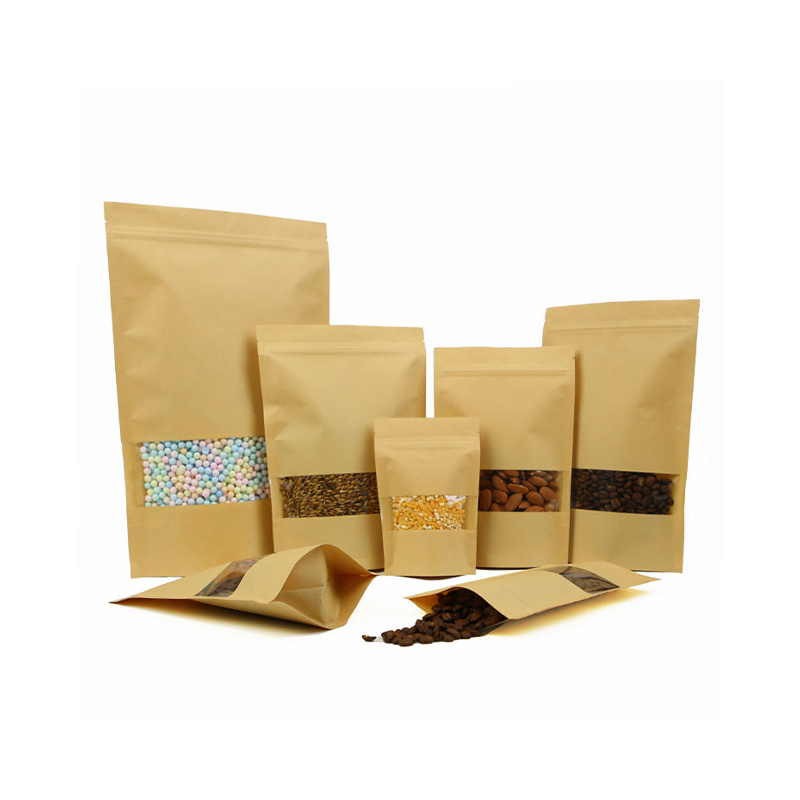
Stand-up pouches are the most widely used format in specialty and retail coffee packaging. Their gusseted bottom allows the bag to stand upright on shelf without support, maximizing brand visibility across two large print surfaces. They accommodate resealable zippers, one-way degassing valves, tear notches, and hang holes as standard add-on features. Available in side-gusset and flat-bottom variants, they are compatible with both pre-formed pouch filling machines and vertical form-fill-seal (VFFS) production lines. Our custom stand-up pouches are produced in multi-layer barrier laminates and support full-surface custom printing for brand differentiation on competitive retail shelves.
Vacuum Brick Bags
The brick bag—also called a block-bottom vacuum bag—is the classic format for commercially ground coffee. After filling and vacuum extraction, the bag is sealed and pressed into a compact rectangular block shape. The rigid, uniform form simplifies stacking, shipping, and retail shelving while providing the lowest possible oxygen level in the package. Brick bags are manufactured from high-barrier aluminum foil composite films and are not designed for resealing—they are a single-use, maximum-protection format intended for extended shelf life.
Side-Gusset Bags
Side-gusset bags expand at both lateral seams to accommodate larger fill volumes, making them the preferred format for commercial and wholesale quantities (typically 250g to 1kg and above). The expandable sides allow the bag to stand once filled while lying flat when empty, which reduces storage space for unfilled stock. Side-gusset bags are commonly fitted with tin-tie or zipper closures and are used extensively by commercial roasters supplying foodservice and wholesale channels.
Flat-Bottom Box Pouches
The flat-bottom pouch—sometimes called a box pouch or quad-seal bag—features a structured rectangular base that gives it a premium, box-like appearance on shelf. Eight-sided sealing provides exceptional structural rigidity and a large, flat front panel ideal for high-resolution graphic printing. This format is increasingly favored by premium and specialty coffee brands seeking to differentiate through packaging aesthetics, particularly in direct-to-consumer and subscription box channels.
Barrier Film Structure: What's Inside a High-Performance Coffee Pouch
The protective performance of a coffee vacuum pouch is determined not by any single layer but by the engineered combination of materials laminated together to form the composite film. Understanding this structure is essential for specifying a pouch that genuinely meets the shelf life and protection requirements of a given coffee product.
A typical high-barrier coffee pouch film consists of three to five functional layers:
- Outer print layer (PET or BOPP): The outermost layer provides the surface for high-resolution flexographic or rotogravure printing. Biaxially oriented polyethylene terephthalate (PET) offers excellent dimensional stability, heat resistance, and print clarity. It also contributes scratch resistance to protect graphics during transit.
- Barrier layer (aluminum foil or metalized PET): This is the most critical layer for coffee preservation. Aluminum foil—typically 7 to 12 microns thick—provides a near-total barrier against oxygen, moisture vapor, and light. Metalized PET (vacuum-deposited aluminum on a PET substrate) offers a lighter, more flexible alternative with slightly lower barrier performance, suitable for shorter shelf life products or when packaging weight reduction is a priority.
- Adhesive layers: Solvent-based or solvent-free adhesives laminate the functional layers together. Food-safe, low-migration adhesive formulations are required for direct and indirect food contact applications and must comply with FDA 21 CFR and EU 10/2011 regulations.
- Inner sealant layer (LLDPE or CPP): The innermost layer is in direct contact with the coffee and must be food-safe, heat-sealable, and chemically inert. Linear low-density polyethylene (LLDPE) is the most common sealant for standard coffee applications, providing strong hermetic seals across a range of sealing temperatures. Cast polypropylene (CPP) is used in applications requiring higher temperature resistance.
The oxygen transmission rate (OTR) of the finished laminate—measured in cc/m²/day—is the primary technical specification for barrier performance. Premium coffee pouches targeting 12+ month shelf life typically require an OTR below 0.5 cc/m²/day, achievable only with aluminum foil-based composites. Metalized film structures typically achieve OTRs of 1–3 cc/m²/day, adequate for 6–9 month shelf life targets.
Key Features That Define a Quality Coffee Vacuum Pouch
Beyond the film structure itself, several functional components and manufacturing specifications distinguish a high-performance coffee pouch from one that merely looks the part.
Hermetic Seal Integrity
The seal is the weakest point in any pouch. A coffee pouch must maintain a hermetic seal—one with zero gas permeation—through the mechanical stress of vacuum extraction, the pressure changes of air freight, and the impact handling of logistics. Seal strength is measured in Newtons per 15mm width; premium coffee pouches target minimum seal strengths of 30–50 N/15mm on all seams. Seal quality is validated through burst pressure testing and dye penetration inspection during production.
One-Way Degassing Valve (for Valve-Sealed Formats)
The valve must open at a consistent cracking pressure—typically 0.3 to 0.8 bar—to allow CO₂ to escape without permitting inward air flow. Low-quality valves with inconsistent cracking pressure either allow oxygen ingress or fail to vent adequately, both of which compromise coffee freshness. The valve attachment point must also be hermetically sealed to the pouch film to prevent bypass leakage around the valve body.
Resealable Zipper
For consumer-facing retail packaging where the product is used over multiple occasions, a press-to-close zipper extending the full width of the pouch opening is standard. Zipper closure force—the amount of pressure required to open and reseal—should be calibrated for easy consumer use (typically 15–25 N) without being so light that it fails to maintain a secure closure between uses.
Print Quality and Surface Finish
Coffee is a visually competitive retail category. Multi-color rotogravure printing with surface treatments—matte lamination, gloss varnish, soft-touch coating, spot UV—allows brands to achieve the premium aesthetic that influences shelf selection. Ink formulations must be food-safe, non-migratory, and compatible with the outer film substrate to prevent delamination or color bleed under humidity or temperature cycling.
Regulatory Compliance
All materials in contact with food—including inner film, adhesives, zipper, and valve components—must comply with applicable food contact regulations. For export markets, this typically includes FDA 21 CFR (USA), EU Regulation 10/2011 (Europe), and GB standards (China). Third-party migration testing certificates should be available from the manufacturer for any commercially supplied coffee pouch.
Selecting the Right Pouch for Your Coffee Brand
Choosing a vacuum packaging pouch for coffee is ultimately a multi-variable decision that must align product chemistry, shelf life targets, production line specifications, and brand positioning. The following framework covers the key dimensions every buyer should evaluate.
- Product type and degassing profile: Freshly roasted whole beans require a valve-sealed flexible pouch with adequate CO₂ venting capacity. Ground coffee destined for extended retail distribution requires true vacuum packaging with aluminum foil barrier film and hermetic sealing. Instant coffee, which produces no post-packaging degassing, can be packed in either format depending on shelf life requirements.
- Target shelf life: If your distribution chain requires 12+ months of stability, specify a pouch with aluminum foil barrier layer and OTR below 0.5 cc/m²/day. For specialty roasters with 3–6 month turnover targets, a metalized PET structure with nitrogen flushing may deliver a more cost-effective solution without sacrificing practical freshness.
- Fill weight and format: Retail single-origin bags (100–500g) suit stand-up or flat-bottom formats. Wholesale and foodservice quantities (1kg and above) typically call for side-gusset or block-bottom formats. Subscription and e-commerce brands increasingly favor flat-bottom box pouches for their structural integrity during postal delivery.
- Production line compatibility: Pre-formed pouches filled on rotary or linear fill-and-seal machines require precise pouch opening dimensions, zipper placement, and valve position specifications matched to the filling equipment. For brands running VFFS or continuous form-fill-seal lines, packaging roll film laminated to the correct barrier specification and slit width is the appropriate supply format rather than pre-formed pouches.
- Custom printing and brand requirements: Minimum order quantities for custom-printed coffee pouches typically start at 5,000–10,000 units for digital printing and 20,000+ units for rotogravure. Brands scaling from small-batch to commercial production benefit from working with a manufacturer who can offer both stock formats and OEM/ODM custom solutions within the same supply relationship, reducing lead times and qualification complexity as volumes grow.
The right coffee pouch is one that preserves what your roasting process created, presents your brand credibly on shelf, and integrates without friction into your production and logistics operation. Getting these parameters right from the outset—rather than retrofitting packaging decisions as the business scales—is the most reliable path to consistent product quality and competitive positioning in a demanding market.




