
 English
 Español
 عربى
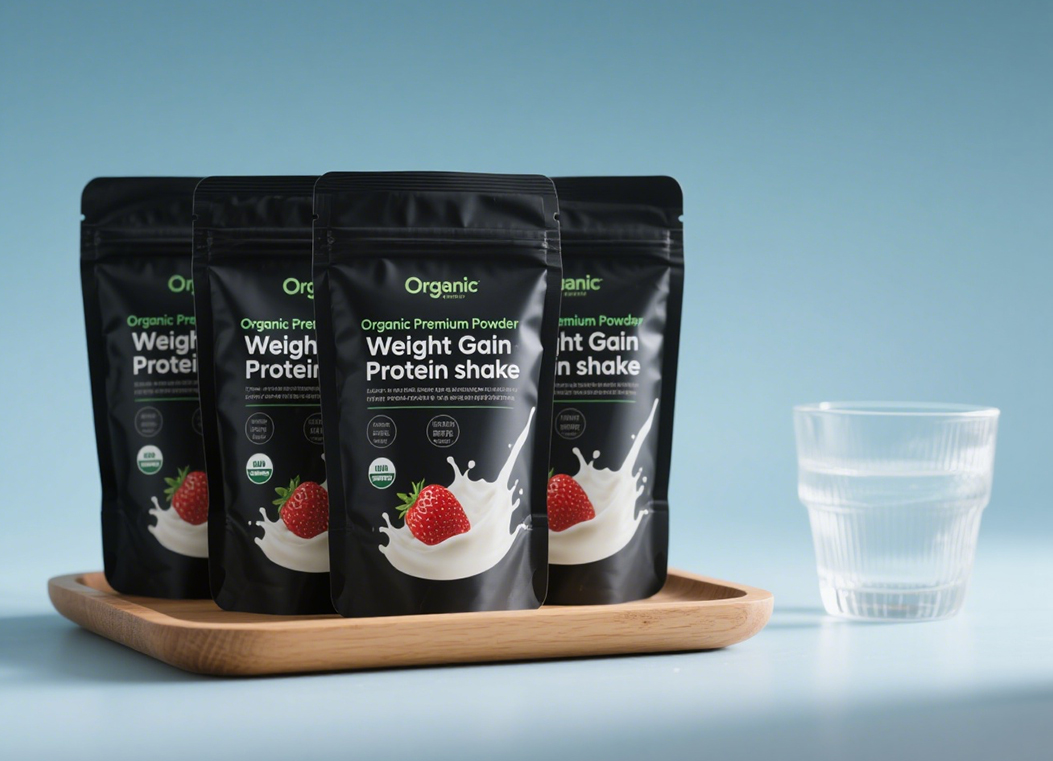
عربىFlat bottom pouches — also called box pouches or square bottom pouches — are flexible packaging bags engineered with a structured rectangular base that allows them to stand upright on a shelf without any external support. Unlike traditional stand-up pouches, which rely on a curved gusset for stability, flat bottom pouches have a fully flat, sealed base panel that creates a wide, stable footprint and a clean, box-like silhouette.
Flat bottom pouches are the preferred format for premium retail packaging across coffee, tea, pet food, snacks, nuts, and powder products — categories where shelf presence, product protection, and consumer convenience all carry equal weight. Their five-panel construction maximizes printable surface area, making them as much a branding asset as a functional container.
Content
- 1 How Flat Bottom Pouches Are Constructed
- 2 Materials Used in Flat Bottom Pouches
- 3 Closure and Feature Options for Flat Bottom Pouches
- 4 Industries and Products That Use Flat Bottom Pouches
- 5 Flat Bottom Pouches vs. Stand-Up Pouches: Key Differences
- 6 Printing Options and Visual Customization
- 7 Standard Sizes and How to Choose the Right Dimensions
- 8 What to Verify When Sourcing Flat Bottom Pouches
How Flat Bottom Pouches Are Constructed
The defining feature of a flat bottom pouch is its five-panel structure: front panel, back panel, two side gusset panels, and a bottom panel. This geometry is fundamentally different from a standard stand-up pouch, which uses only three panels with a curved bottom gusset. The flat bottom panel is formed by folding and heat-sealing a separate piece of film perpendicular to the body of the pouch, creating a rigid base that holds its shape even when partially filled.
The Five-Panel Design in Practice
- Front and back panels: The primary display surfaces. Full-bleed printing is possible on both, giving brands significantly more real estate than a cylindrical can or folding carton of comparable volume.
- Side gussets: Expand outward as the pouch is filled, creating the three-dimensional volume. Gusset width determines how much the pouch can hold relative to its footprint.
- Bottom panel: The distinguishing feature. A flat, separate film panel is heat-sealed across the base, creating a stable rectangular foundation. This panel also contributes to the structural rigidity of the filled pouch.
- Top closure area: Can be finished with a straight-cut open top (for filling and heat sealing), a zipper reseal, a tin-tie, or a fold-over closure depending on the application.
This construction gives a filled flat bottom pouch the appearance of a small box or brick — which is why the format is sometimes called a "brick pouch" in the European packaging industry. A 250g coffee flat bottom pouch, for example, typically measures approximately 130mm wide × 220mm tall × 80mm deep, providing a footprint comparable to a metal can but with far lower material weight and cost.
Materials Used in Flat Bottom Pouches
Flat bottom pouches are multi-layer laminate structures. The combination of films used in the laminate determines barrier performance, seal strength, appearance, and compatibility with filling and sealing equipment. Most pouches are built from two to four layers bonded with adhesive or extrusion lamination.
| Layer | Common Material | Primary Function |
|---|---|---|
| Outer (print layer) | PET (polyester), OPP, Kraft paper | Printability, gloss/matte finish, puncture resistance |
| Barrier layer | Aluminum foil, metalized PET, EVOH, SiOx-coated film | Oxygen and moisture barrier, flavor and aroma retention |
| Inner (seal layer) | PE (polyethylene), CPP, LLDPE | Heat sealability, food contact safety, moisture resistance |
| Optional tie layer | Adhesive or tie resin | Bonding incompatible layers; delamination resistance |
Foil vs. Non-Foil Barrier Structures
Aluminum foil laminates deliver the highest barrier performance — oxygen transmission rates (OTR) below 0.01 cc/m²/day — making them the standard for roasted coffee, which is highly sensitive to oxygen exposure. However, foil structures are not recyclable in most curbside programs and cannot be used in microwave applications.
For brands seeking recyclable options, all-PE laminates (using MDOPE or BOPE outer layers with PE inner layers) and monomaterial PP structures are now commercially available for flat bottom pouches. These structures sacrifice some barrier performance but qualify for flexible film recycling streams where collection infrastructure exists. Metalized PET or SiOx-coated films offer a middle ground — better recyclability than foil with OTR values in the 1–5 cc/m²/day range, suitable for tea, nuts, and dried snacks.
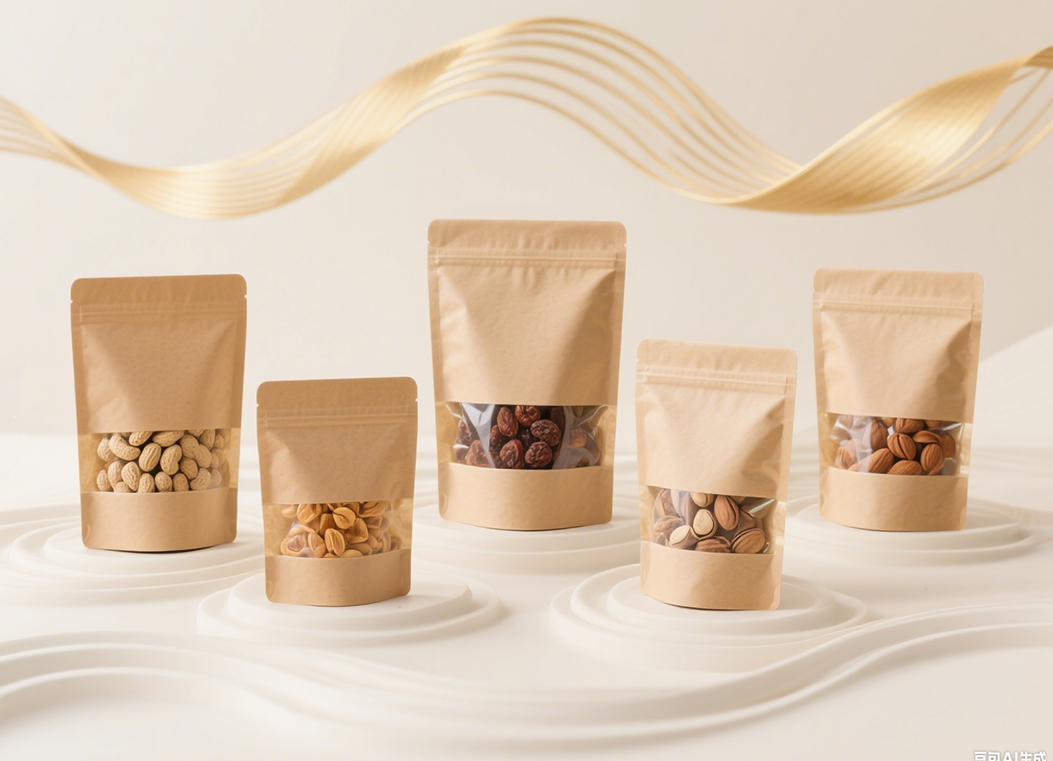
Kraft Paper Flat Bottom Pouches
A significant share of the premium coffee and specialty food market uses Kraft paper as the outer layer of flat bottom pouches, laminated to an inner barrier film. The natural brown paper aesthetic communicates artisan quality and sustainability. Kraft pouches are not inherently recyclable unless the paper and film layers can be separated or the structure is certified as a paper-recyclable composite — buyers should verify specific recyclability claims with their supplier rather than assuming paper outer = recyclable.
Closure and Feature Options for Flat Bottom Pouches
Flat bottom pouches support a wide range of functional features that affect consumer experience, product freshness, and filling line compatibility. The right combination depends on the product type, shelf life requirements, and consumer use pattern.
Top Closure Types
- Heat-sealed top (no reseal): The standard for products intended for single-use or full consumption after opening — whole bean coffee, single-serving snacks. Provides the cleanest appearance and is compatible with the widest range of filling machines.
- Zipper reseal: A press-to-close zipper track integrated near the top allows consumers to reclose the pouch after opening. Essential for products used in multiple servings — ground coffee, pet treats, protein powder, granola. Available in standard zipper, child-resistant zipper, and slider zipper variants.
- Tin-tie closure: A metal wire strip laminated into the top of the pouch that allows the consumer to fold and press the top closed. Common in artisan coffee and bakery applications. More tactile and premium-feeling than a zipper but less airtight.
- Fold-over top: A simple fold and tuck closure without any hardware. Used primarily for dried goods where full resealability is not critical.
Valves and Vents
Freshly roasted coffee continues to off-gas CO₂ for days or weeks after roasting. Without a degassing valve, this gas would either burst the sealed pouch or require a delay between roasting and packaging. One-way degassing valves — small pressure-relief discs heat-welded to the front or back panel — allow CO₂ to escape while preventing oxygen ingress. They are a standard feature on specialty coffee flat bottom pouches and are available in round (10mm) or flat formats. Some brands use the valve as a design element, positioning it prominently on the front panel.
Hang Holes and Euro Slots
For retail environments that use pegboard or hook displays, flat bottom pouches can be manufactured with a hang hole or euro slot punched into the top seal area. This adds versatility — the same pouch can stand on a shelf or hang from a peg, which is valuable for multiformat retail distribution.
Tear Notches
A small V-notch or laser-scored tear line on the side seal area allows consumers to open the pouch cleanly without scissors. For pouches with a zipper, the tear notch is positioned just above the zipper track. For heat-seal-only pouches, it is placed at the top edge of the seal area.
Industries and Products That Use Flat Bottom Pouches
The flat bottom pouch format has expanded well beyond its origins in the specialty coffee sector. Its combination of structural stability, barrier performance, and premium visual appeal has driven adoption across a broad range of product categories.
| Industry | Typical Products | Key Pouch Features Needed |
|---|---|---|
| Coffee & Tea | Whole bean, ground, loose-leaf, pods | Degassing valve, high O₂ barrier, zipper or tin-tie |
| Snacks & Nuts | Trail mix, almonds, granola, chips | Resealable zipper, moisture barrier, tear notch |
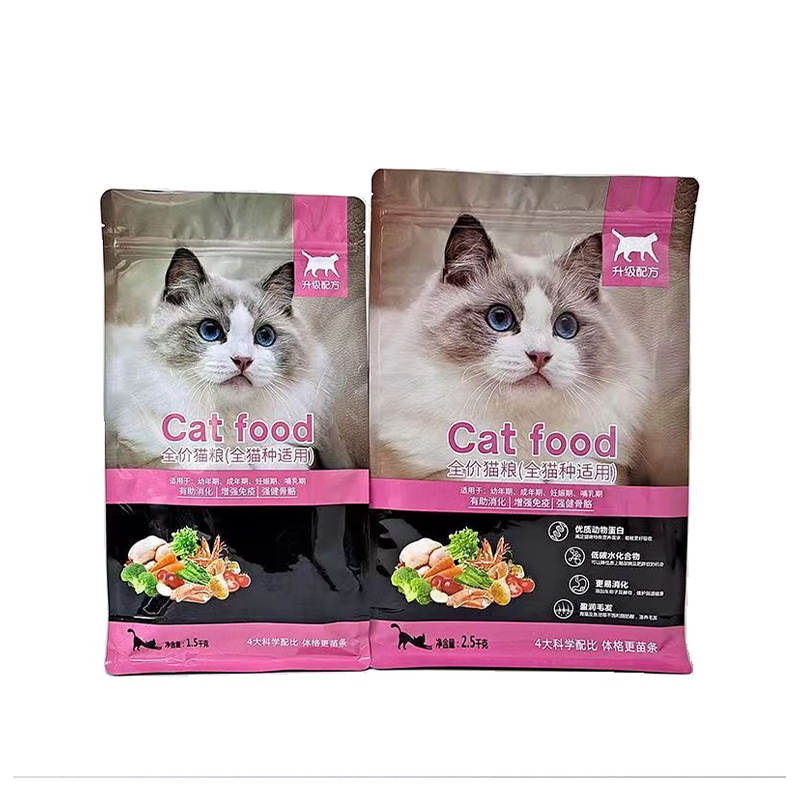
| Pet Food & Treats | Kibble, jerky treats, dental chews | Heavy-gauge film, strong zipper, odor barrier |
| Health & Nutrition | Protein powder, supplements, superfoods | Moisture barrier, wide mouth opening, tamper evidence |
| Baked Goods & Confectionery | Cookies, chocolate, candy, crackers | Grease resistance, reseal, premium print quality |
| Agricultural & Garden | Seeds, fertilizer, soil amendments | Puncture resistance, UV protection, heavy duty seal |
Flat Bottom Pouches vs. Stand-Up Pouches: Key Differences
Both formats are flexible, freestanding pouches — but they differ meaningfully in shelf performance, fill behavior, and production cost. Understanding the trade-offs helps brands choose the right format rather than defaulting to whichever they are most familiar with.
- Shelf stability: Flat bottom pouches stand significantly more upright and stable than stand-up pouches, particularly at partial fill levels. A stand-up pouch at 50% fill tends to slump or lean; a flat bottom pouch maintains its shape at any fill level due to the rigid base panel.
- Printable surface: The five-panel design of a flat bottom pouch provides up to 40% more printable area than a comparable stand-up pouch, including printable side gussets and a bottom panel that is visible when the pouch is lying flat during shipping or display.
- Material cost: Flat bottom pouches use more film than equivalent stand-up pouches due to the additional bottom panel, typically adding 10–20% to material cost per unit. For premium products where shelf presence drives purchase, this premium is usually justified.
- Filling line compatibility: Flat bottom pouches are generally filled on vertical form-fill-seal (VFFS) machines or pre-made pouch fill-and-seal machines. They require more complex tooling than stand-up pouches and are not compatible with all existing filling lines. Equipment investment or line conversion may be required when transitioning formats.
- Consumer perception: Shelf research consistently shows flat bottom pouches are perceived as more premium than stand-up pouches. A 2022 packaging perception study by PMMI found that 67% of consumers associated flat bottom pouches with higher product quality compared to equivalent stand-up pouches, even when the contents were identical.
Printing Options and Visual Customization
The five large panels of a flat bottom pouch make print quality and finish selection particularly important. For most brands, the pouch is the primary consumer touchpoint — it must communicate brand identity, product information, and quality simultaneously.
Printing Methods
- Rotogravure printing: The standard for high-volume orders (typically 50,000+ units per SKU). Produces sharp, consistent colors with excellent ink density. Cylinder engraving costs are high upfront ($300–$800 per color per SKU) but amortize quickly at volume.
- Flexographic printing: Lower plate costs than gravure, suitable for medium runs (10,000–50,000 units). Color consistency is slightly inferior to gravure but adequate for most brand requirements. Commonly used for Kraft paper outer layer pouches.
- Digital printing: No plate or cylinder costs, making it viable for short runs (500–5,000 units), product launches, or seasonal SKU variations. Print quality for photographic images and fine gradients has improved significantly but still lags behind gravure for critical brand color matching.
Surface Finish Options
- Gloss lamination: High-shine surface that intensifies color vibrancy. Most impactful on dark backgrounds and photographic imagery. Can show fingerprints more readily than matte.
- Matte lamination: Soft, non-reflective finish associated with natural and premium aesthetics. Widely used in specialty food, organic products, and minimalist brand identities.
- Soft-touch coating: A tactile matte coating that feels velvety to the touch. Adds a significant premium perception and is a common differentiator for luxury food and supplement brands.
- Spot UV varnish: A gloss coating applied selectively over specific design elements (logo, product image) against a matte background. Creates high visual contrast and a sense of quality with minimal additional cost.
- Metallic effects: Achieved through metalized inner layers, foil stamping, or holographic overlaminates. Used sparingly to add visual impact to logos or accent elements.
Standard Sizes and How to Choose the Right Dimensions
Flat bottom pouches are available in a wide range of sizes, and most manufacturers offer both standard catalog dimensions and fully custom sizing. Choosing the right dimensions requires balancing fill volume, shelf space constraints, and visual proportions.
| Pouch Size | Approx. Dimensions (W×H×D) | Typical Fill Volume | Common Applications |
|---|---|---|---|
| Small | 100 × 165 × 60 mm | 100–200g | Tea, spices, single-serve snacks |
| Medium | 130 × 220 × 80 mm | 250–400g | Coffee (250g), nuts, granola |
| Large | 160 × 260 × 100 mm | 500–750g | Coffee (500g), pet treats, protein powder |
| Extra Large | 200 × 300 × 120 mm | 1–2 kg | Bulk coffee, pet food, bulk supplements |
When specifying dimensions, always confirm fill volume with your actual product under realistic fill conditions — bulk density varies widely between products. A pouch that appears correctly sized for 500g of protein powder may hold only 350g of a higher-density nut mix at the same physical dimensions. Request a pre-production sample and fill it with your actual product before approving final dimensions.
What to Verify When Sourcing Flat Bottom Pouches
Sourcing flexible packaging for the first time — or switching suppliers — introduces risk around quality, compliance, and compatibility. A structured evaluation process reduces costly mistakes before production begins.
- Request a physical sample in your specified laminate structure, size, and finish. Evaluate seal integrity by pulling seams manually; a quality seal should not delaminate under firm hand pressure.
- Confirm food-contact compliance documentation. For products sold in the EU, ask for a Declaration of Compliance (DoC) under EU Regulation 10/2011. For the US market, confirm FDA 21 CFR compliance of all inner-layer materials.
- Verify filling machine compatibility before ordering. Provide your equipment manufacturer and model number to your pouch supplier and request confirmation of compatibility, particularly for zipper placement height and gusset expansion ratios.
- Confirm oxygen transmission rate (OTR) and water vapor transmission rate (WVTR) test data for the specific laminate structure — not generic claims. These values should come from third-party lab testing, not internal estimates.
- Clarify print color management. Request a color proof (either physical or certified digital) before plate or cylinder production. Specify Pantone references or provide a calibrated ICC color profile to minimize color drift between approval and production.
- Agree on acceptable defect rates and inspection standards in writing. Industry standard AQL (Acceptable Quality Limit) for flexible packaging is typically AQL 1.0 for critical defects (seal failures, contamination) and AQL 2.5 for major cosmetic defects.




